Verizon 5G Home Internet Review
Verizon's fixed-wireless internet — faster than T-Mobile in most coverage markets, with the same caveats about tower placement and peak-hour variability.
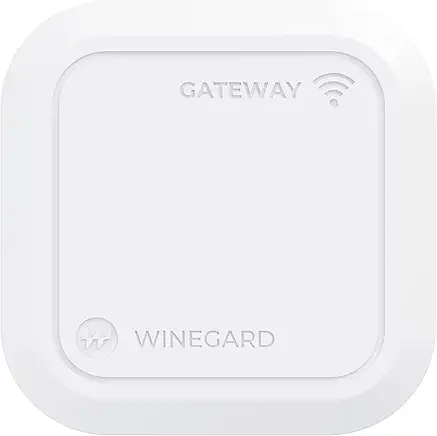

Our Take
Verizon 5G Home Internet is what T-Mobile Home Internet wants to be when it grows up — faster, more consistent, lower latency, better gateway. The catch is coverage. Verizon's mid-band Ultra Wideband 5G has a tighter footprint than T-Mobile's network, and the millimeter-wave coverage Verizon falls back to in dense markets is famously unreliable indoors. The product is great where it works. Whether it works at your specific address is the entire question.
I've installed it for clients in DC metro, Philly, and parts of the New York footprint where mid-band coverage is mature. In those installs, Verizon 5G Home delivers fiber-class speeds (200–500 Mbps typical, occasionally up over 1 Gbps) with latency that's good enough for normal video calls and competitive enough for casual gaming. Where coverage is millimeter-wave-only, I've watched it cut out when someone walks between the gateway and the window. Same product name, totally different experiences depending on which 5G technology reaches your address.
The decision tree is the same shape as T-Mobile: verify coverage, run the 30-day trial, test your actual peak-hour use. If you already have Verizon Wireless, the $50 bundle price makes this dramatically cheaper than cable. Without the wireless line, $70 is still cheaper than cable, just a smaller margin.
The biggest daily frustration — the indoor coverage gotcha
Every ISP has one. Verizon 5G Home's is what happens when your address is on the wrong side of Verizon's mid-band vs millimeter-wave divide. Mid-band (their "Ultra Wideband" branding) is what you want — it penetrates walls, works through windows, and behaves like a real broadband connection. Millimeter-wave is what Verizon defaults to in a lot of dense urban markets, and it does not like walls. A house that gets 800 Mbps speedtests outdoors might get 80 Mbps from the same gateway sitting two feet inside a window.
You can't tell from the coverage map which one your address gets. Verizon's "5G Home is available" status covers both, and they don't surface the distinction at signup. The 30-day trial is the workaround — you find out by testing. If your speeds are erratic, fluctuate wildly with weather or with people walking past the gateway, you're probably on millimeter-wave and should consider whether the deal is worth it.
When Verizon 5G Home is the right call
- You're already on Verizon Wireless and your address is in mid-band 5G coverage. This is the highest-leverage scenario. The mobile-line bundle drops the price to $50, mid-band 5G delivers fiber-class speeds, and you save $30–$60/month vs cable.
- You're paying $80+ for cable and fiber isn't lit. Same case as T-Mobile, with Verizon delivering faster speeds when coverage is solid. Worth trying first if your address gets mid-band Verizon coverage.
- You're in the Northeast, Mid-Atlantic, or Chicago metros where Verizon's network is most mature. These are the markets where Verizon 5G Home shines. The coverage map is thinner in other regions, especially the Southeast and Pacific Northwest.
- You need better-than-average upload speeds. Verizon 5G Home's upload is typically 30–80 Mbps on mid-band, materially better than T-Mobile and most cable. Not symmetrical like fiber, but usable for cloud backups and high-quality video calls.
- You want a single-vendor relationship with Verizon for mobile + home. Some households value not having to deal with two companies. Verizon makes this easy and discounts it.
- You hate truck-rolls and installers. 15-minute self-install. Box arrives, you plug it in, walk it around the house with the app, you're online.
When to consider another ISP
- Coverage at your address is millimeter-wave only. The product becomes unreliable indoors. T-Mobile or cable internet is the better bet.
- You compete-game or stream as a creator. Latency is better than T-Mobile but still 25–50 ms typical. Fiber is the answer for serious gaming.
- You don't have Verizon Wireless and don't want to switch. Without the bundle, you're paying $70 base ($90 for Plus), and the value proposition vs T-Mobile gets thin.
- You're rural or in a market where Verizon's 5G hasn't been built out. Coverage gaps are real. T-Mobile's network reaches more rural ZIPs.
Key features (and what they actually mean for you)
The technology — mid-band and millimeter-wave 5G
Verizon 5G Home runs on two different 5G technologies depending on your address:
🧠 In plain English: Mid-band (Ultra Wideband) is the good one — it carries data fast and penetrates walls. Millimeter-wave (mmWave) is the high-speed-but-fragile one — it can hit 2+ Gbps in ideal line-of-sight conditions but degrades quickly through walls, glass, or even rain. Same product brand, totally different in-home experience.
Speed tiers — what you actually get
| Tier | Monthly (with mobile line) | Monthly (without) | Best for |
|---|---|---|---|
| 5G Home | $50 | $70 | Normal household use |
| 5G Home Plus | $70 | $90 | Heavy use, prioritized speeds |
💡 In plain English: The $50 bundle price is the headline deal. Without the mobile line, the math gets less compelling — T-Mobile's $50 with no bundle requirement is the competitor. Plus tier only matters if your tower is congested and the $20 jump fixes it.
The gateway — wall-mountable Wi-Fi 6 router with 5G modem
Verizon's gateway is more polished hardware than T-Mobile's — wall-mountable, real Wi-Fi 6 coverage, decent management app. Coverage area on the built-in Wi-Fi is roughly 2,000 sq ft. Bigger houses still need a mesh add-on, but for typical homes the gateway alone is fine.
📡 The honest take: Of the 5G Home gateways, Verizon's is the most "real router." It's not as configurable as a standalone Eero or Orbi, but it covers a normal house without help.
Install — self-install, 15 minutes
Same model as T-Mobile. Box arrives, you plug it in, walk it around to find the strongest signal, you're online. No tech, no install fee, no truck-roll.
Data — no caps, no contracts
Unlimited data, no overages, no contract on either tier. Same as T-Mobile in this regard.
Bundled extras — mobile-line discount, sometimes streaming
The $20/month discount with a Verizon Wireless line is the main bundle benefit. Verizon occasionally throws in streaming services as promo (Disney+ bundle, Netflix bundle, etc.) — these rotate. Don't buy on a streaming promo; it'll expire.
The gateway — solid, but coverage is the whole story
Verizon's gateway is one of the better ISP-supplied units I've installed. Compared to T-Mobile's and a self-bought Eero:
| Feature | Verizon 5G Home Gateway | T-Mobile Gateway | Eero Pro 6E |
|---|---|---|---|
| 5G modem built in | ✓ Mid-band + mmWave | ✓ Mid-band + low-band | n/a |
| Wi-Fi 6 | ✓ | ✓ | ✓ Wi-Fi 6E |
| Wall-mountable | ✓ | No | Yes |
| Signal-strength app | ✓ | ✓ (excellent) | n/a |
| Mesh-capable out of the box | Optional ($) | No | ✓ |
| Coverage (built-in Wi-Fi) | ~2,000 sq ft | ~1,500 sq ft | ~2,000 sq ft |
| Ethernet ports | 2× 1 Gbps | 2× 1 Gbps | 2× 2.5 Gbps |
| Replacement when it dies | Verizon ships one | T-Mobile ships one | You replace ($200) |
The gateway is fine. The variable is what's outside the gateway — the cell tower, the 5G technology hitting your house, and how busy the tower is at peak hours.
Reliability, support, and outages
Reliability is binary by address. Mid-band 5G coverage is rock-solid — outages are rare, performance is consistent, peak-hour dips are manageable. Millimeter-wave coverage is the opposite — weather affects it, walls block it, and you'll see speeds vary wildly hour-to-hour.
Support is among the better ISP support I've dealt with. Verizon's customer service for 5G Home is generally better than for Fios (which is good) and dramatically better than cable. Trial-period returns are painless.
Outages, when they happen, are tower-level — same as T-Mobile. If the local cell tower goes down, you have no internet. Resolution is usually fast.
The real monthly cost
Verizon 5G Home is one of the more honestly-priced internet products. The gotcha is the mobile-line requirement for the $50 price.
| Line item | With mobile line | Without | Notes |
|---|---|---|---|
| Base price (5G Home) | $50/mo | $70/mo | $20/mo bundle discount |
| Gateway rental | $0 | $0 | Included |
| Taxes & fees | ~$3–$5/mo | ~$3–$5/mo | Varies by state |
| Realistic monthly | ~$53–$55/mo | ~$73–$75/mo | |
| 5-year cost | ~$3,200 | ~$4,400 |
💡 The math that actually matters: With a Verizon Wireless line, this is the cheapest decent internet product in markets with mid-band coverage. Without the line, T-Mobile beats it on price for similar real-world performance — unless Verizon's speeds in your area are dramatically faster.
The three real options compared
| Item | Verizon 5G Home | T-Mobile Home | Cable Internet (1 Gig) |
|---|---|---|---|
| Download (mid-band 5G) | 200–1,000 Mbps | 50–300 Mbps | 940 Mbps |
| Upload | 30–80 Mbps | 10–35 Mbps | 25–35 Mbps |
| Latency | 25–50 ms | 30–60 ms | 15–30 ms |
| Coverage map | Tighter — mid-band only is the good one | Broader, more consistent | Nearly universal |
| Equipment | Included | Included | $14/mo rental |
| Annual contract | None | None | None (most) |
| Install | Self, 15 min | Self, 15 min | Pro or self-kit |
| Realistic monthly | $50–$70/mo | $50–$60/mo | $80–$110/mo |
Where Verizon mid-band reaches and you have a mobile line, Verizon wins. Where it doesn't, T-Mobile or cable is the better bet. Cable wins on speed and consistency at much higher cost.
What's missing
- Symmetrical upload. Like all 5G Home products, upload is asymmetric. Fiber remains the only fix.
- Reliable coverage prediction. You can't tell from the map whether you'll get mid-band or millimeter-wave. The trial is how you find out.
- TV bundling. No combined TV plan. Pair with YouTube TV, Hulu + Live, or Verizon's separate Fios TV App if you're a Fios TV customer.
- Performance certainty. Like all wireless internet, performance varies. Households that need guaranteed consistency should choose fiber.
Who Verizon 5G Home is best for
The right household: already has Verizon Wireless, lives in a market with mid-band Ultra Wideband 5G coverage, doesn't need fiber-class symmetrical speeds. That's a lot of households in Verizon's Northeast and Mid-Atlantic footprint. For those households, this is the single best internet deal in their market.
For households without Verizon Wireless or in millimeter-wave-only areas, the math gets thinner. Run the 30-day trial, run peak-hour speedtests, and decide based on what you actually see. Don't decide based on the marketing.
More photos
Where to rent
Boxes are rental-only — you cannot purchase them. Rate is per box, per month, billed by Verizon as part of your service.
Setup tips from a pro installer 8 tips · click to expand
- Verify coverage at your exact address — not just the ZIP Verizon's coverage map looks generous at ZIP-level but has dead zones at street-level. Run your specific address through the checker and only trust 'available' results, not 'check back soon.'
- If millimeter-wave is your only signal, expect indoor issues Verizon has two 5G technologies: mid-band (Ultra Wideband) and millimeter-wave. Mid-band penetrates walls well. Millimeter-wave doesn't — it struggles to get through windows in some homes. Know which one your address gets.
- Place the gateway near a window facing the cell tower Like T-Mobile, the gateway is signal-dependent. The Verizon app has a placement assistant — walk it around the house and pick the spot with the strongest bars.
- Stack the bundle discount with mobile lines Verizon's $50/month price requires a qualifying Verizon Wireless line. Without one, it's $70. If anyone in the house has Verizon Wireless, bundle. If not, do the math on switching wireless.
- Don't pay extra for 5G Home Plus unless you need it The $70 Plus tier (with mobile line; $90 without) buys you prioritized data and a slightly better router. For most households, regular 5G Home is plenty.
- Use the gateway's built-in Wi-Fi 6 unless your house is large The included gateway has solid Wi-Fi 6. For homes under 2,000 sq ft single-story, you don't need a separate router. Bigger houses, plan on Ethernet to your own mesh.
- Test peak-hour performance before the trial expires Verizon offers a 30-day trial. Run speedtest.net at 7 PM, 8 PM, 9 PM on weekdays. If performance holds, you're good. If it tanks, return it without paying.
- Know the difference between 5G Home and Fios Fios is wired fiber. 5G Home is wireless. Different products, different reliability, different upload speeds. Don't confuse them — and don't let a Verizon rep convert you from Fios to 5G Home without understanding the trade.