Optimum Altice One Review
Optimum's all-in-one box — cable, internet, and Wi-Fi in one unit, with the trade-offs that come with it.


Our Take
Of all the cable platforms that have come through clients' homes, Altice One is the one with the most distinctive architecture — and the most distinctive failure mode. Optimum (Altice USA) combines the cable receiver, the modem, and the Wi-Fi router into one box. One unit, one rental fee, one plug, one point of failure. When it works, it's the cleanest install of any cable provider. When it fails, you lose TV, internet, and Wi-Fi at the same moment.
The platform itself is competent. Picture is clean on coax. Channel lineup matches Optimum's full TV package. Voice remote works. Built-in streaming apps include Netflix, YouTube, Prime Video, and a few others — better than Spectrum's app story, on par with Cox's, behind Comcast's X1. The interface is responsive. Cloud DVR delivers what you'd expect.
The drawbacks center on the all-in-one design choice. Because the box is also your modem, when it has a firmware hiccup, you lose internet too. When the Wi-Fi radio inside it gets old and weak, you have to swap the whole unit rather than upgrade just the router. If you've already built out a mesh Wi-Fi system you trust, you end up disabling the Altice One's Wi-Fi radio and using only its modem function — which works but feels wasteful.
Whether you should keep Altice One depends on the specifics: how many TVs, whether you'd rather separate modem from cable box for upgrade flexibility, whether you watch local sports channels (YES, MSG, NBC Sports, etc.) that streaming services don't carry, and how comfortable you are with the all-in-one risk.
The biggest daily frustration — when it fails, you lose everything
The thing that wears Altice One households down faster than anything else isn't the box rental or the channel count. It's the all-in-one failure mode.
Most cable platforms degrade gracefully. A failing Comcast X1 still has internet from the separate modem. A failing Fios TV One box still has Wi-Fi from the separate router. A failing Spectrum receiver still has internet from the separate gateway. With Altice One, a single piece of hardware handles all three jobs — so a single failure takes the household offline completely.
I've been on service calls where:
- The cable picture froze.
- The internet dropped at the same moment.
- The Wi-Fi disappeared seconds later.
- The homeowner couldn't even use their phone hotspot because Optimum's tech-support app needs internet to authenticate.
The fix is a tech visit and a box swap — usually 24–48 hours. In that window the household has no TV, no internet, and no Wi-Fi. A $30 travel router with a phone hotspot becomes a household emergency kit. Comcast, Verizon, Spectrum, and Cox customers don't need one.
This isn't a daily friction the way Spectrum's slow guide is. It's an infrequent friction with an outsized impact — and it's worth knowing about before you commit to the platform.
When to keep Altice One
You watch local sports channels (YES, MSG, NBC Sports, etc.) that streaming services don't carry. Local sports networks are the single most common reason to stay. YouTube TV carries almost none. DirecTV Stream costs more. If your team plays on a local sports channel Optimum carries, this is still the cleanest path.
Your install has been stable for a year or more. Altice One's reliability varies — a healthy install runs for years; a flaky one needs swaps frequently. If yours has been stable, the platform works.
You value the single-box simplicity. One device behind the TV, one ethernet cable from the wall, one Wi-Fi network broadcasting. Renters and small apartments often genuinely prefer this.
You actually use the built-in streaming apps. Netflix, YouTube, Prime Video, and a few others on the same remote as live cable. If your household uses these, the integration matters.
You have older family members who refuse to learn a new interface. A parent who's pressed the same channel-up button for twenty years isn't going to be happy with YouTube TV.
You're a sports household that won't risk a Wi-Fi-dependent stream. Coax delivery hasn't had the outage issues streaming has. For big-game households, cable is still the safer call.
When to consider getting out
You've already had an Altice One failure that took down all three services. Once it happens, the all-in-one risk feels real. Many households who've been through it switch.
You have four or more TVs. Altice One Minis are cheaper than full receivers but still cost ~$10/month each. A four-TV household pays $40+/month in rentals before even adding the main unit fee.
You want to run your own mesh Wi-Fi. Altice One's Wi-Fi radio is fine for small apartments and falls behind in larger homes. If you've got eero, Orbi, or any modern mesh you trust, the all-in-one's Wi-Fi function becomes redundant.
You're in a new build or doing a renovation. Don't install Altice One in a new home in 2026. Optimum itself is steering new customers toward Optimum Stream. Skip the all-in-one architecture entirely if you have the choice.
Key features (and what they actually mean for you)
The boxes — Altice One main + Altice One Mini
Altice One ships in two pieces.
Altice One (main unit) — the all-in-one box. Cable receiver + modem + Wi-Fi router in one chassis. Goes by the main TV and is the gateway for the whole house. Replacement-only if any of the three functions fails.
Altice One Mini — smaller client box for secondary TVs. Wireless connection back to the main unit. No DVR storage of its own, no modem function. Goes on bedroom and basement TVs.
🧠 Why this matters: when the main Altice One needs replacement, every Mini in the house also loses TV during the swap (they depend on it). The platform's failure mode cascades.
The Voice Remote — works once paired
The Altice voice remote uses RF for the box and IR for TV control. Voice search covers cable channels, on-demand, and the built-in streaming apps.
📡 Why RF beats IR for cable boxes: no line-of-sight required. Altice One can sit on the entertainment center or in a cabinet — the remote still works.
What it isn't is the smoothest pairing experience. Like Cox, occasional re-pair is needed after power events. Plan on knowing the re-pair sequence.
Channel lineup including local sports channels
Optimum TV tiers range from ~140 channels (Core) to ~340+ (Premier) plus regional add-ons. Major broadcast networks, major cable channels, premium movies available, and local sports channels (YES, MSG, NBC Sports, etc.) — Optimum's Northeast footprint overlaps with strong regional sports coverage.
🏈 Why this matters: Optimum's local sports channel coverage is among the strongest in the Northeast. YES (Yankees), MSG (Knicks, Rangers), and NBC Sports regional all carry on Optimum's lineup. YouTube TV carries almost none. If your team plays on those, Optimum is still the path of least resistance.
DVR — cloud-based, 60–150 hours
Optimum's cloud DVR holds 60–150 hours depending on tier. Multi-room playback works through the Altice app. Series-record priorities work as expected.
⚠️ The honest caveat: standard cloud-DVR retention limits apply (12 months typical), and Optimum reserves the right to remove specific content for licensing reasons.
Built-in streaming apps — solid middle of the pack
What's actually built in:
- ✓ Netflix — full native app
- ✓ YouTube — full native app
- ✓ Prime Video — full native app
- ✓ Pluto TV and a few FAST services
What's NOT built in:
- ✗ Disney+
- ✗ Max (HBO)
- ✗ Hulu
- ✗ Apple TV+
- ✗ Paramount+
- ✗ Peacock
- ✗ ESPN+
🎮 What this means in practice: Altice One covers the most-used streamers (Netflix, YouTube, Prime) but leaves Disney+, Max, and Hulu off the platform. Households who pay for those end up using their TV's smart platform or a separate streamer — bringing back the two-remote dance for some content.
The remote — capable, finicky pairing
| Remote feature | Altice Voice Remote | Roku Voice Remote Pro 2 | Apple Siri Remote |
|---|---|---|---|
| RF / Bluetooth — hide the box | ✓ RF | ✓ Bluetooth | ✓ Bluetooth |
| Voice search across channels and apps | ✓ Cable + built-in apps | ✓ "Hey Roku" hands-free | ✓ Siri (press to talk) |
| Controls TV power, volume, input | ✓ IR | ✓ Most TVs | ✓ Built-in IR + CEC |
| Headphone jack on remote | ✗ | ✓ | ✗ |
| Lost-remote finder | ✗ | ✓ | ✗ |
| Backlit buttons | ✗ | ✓ | ✗ |
| Button count | ~30 (full cable remote) | ~12 | ~7 |
| Battery / charging | 2× AA (~4–6 mo) | Rechargeable USB-C | Built-in rechargeable, USB-C |
The Altice voice remote works well when paired. Voice across cable AND built-in apps is genuinely useful. RF is a strength for hiding the box.
What it isn't is set-and-forget. Pairing flakes occasionally. AA batteries. No backlight or headphone jack. Standard cable-remote feature set.
Closed captions, parental controls, and accessibility
Solid. Closed captions are customizable under Settings → Accessibility. ADA-compliant. Parental controls are PIN-locked at the box level. Audio descriptions and screen-reader support available.
Box rental costs (you cannot buy them)
Altice One is rental-only. There is no purchase option. The Altice One main unit typically rents in the $10–$20/month range — sometimes bundled into the TV service price as a 'gateway' fee. Additional Altice One Mini boxes for secondary TVs rent for approximately $10/month each. The first box is sometimes included in promotional bundles — verify on your bill.
| Per box | Per year | 5-year cost | |
|---|---|---|---|
| Altice One main unit | ~$10–$20/month | $120–$240 | $600–$1,200 |
| Each Altice One Mini | ~$10/month | $120 | $600 |
| Typical 2-TV setup | ~$20–$30/month | $240–$360 | $1,200–$1,800 |
| Typical 4-TV setup | ~$40–$50/month | $480–$600 | $2,400–$3,000 |
💡 The math that actually matters: Altice One's gateway fee is the wild card — sometimes $10/month, sometimes $20/month, sometimes 'free' but baked into a higher TV price. Read your bill carefully. The Minis are predictable at $10/month each. Multi-TV households quickly hit the same per-month rental territory as Spectrum and Cox.
The three real options compared
Numbers below are for a typical two-TV setup on Gigabit Internet in a major Optimum market:
| Item | Keep Altice One | Switch to Optimum Stream | Cut TV — keep Internet only |
|---|---|---|---|
| Internet | $80/mo | $80/mo | $80/mo |
| TV service (Core) | $80/mo | $70/mo | — |
| Box rental (2 TVs) | $20/mo (main + 1 Mini) | $10/mo | — |
| Fees & taxes | ~$18/mo | ~$10/mo | ~$3/mo |
| Replacement service | — | — | $82.99/mo (YouTube TV) |
| Monthly total | ~$198/mo | ~$170/mo | ~$166/mo |
| Channel count | 140+ | 140+ | 100+ (YouTube TV) |
| Local sports channels | Full | Full | Usually missing |
| DVR | 60–150 hr cloud | Smaller cloud | Unlimited cloud |
| Reliability | Coax + Wi-Fi all-in-one risk | Wi-Fi dependent | Wi-Fi + service dependent |
| Remote / inputs | One remote, one input | One remote, one input | One remote, one input |
| Service calls | A few per year typical (high impact when they happen) | Rare | Rare |
Read carefully — Optimum Stream is meaningfully cheaper for multi-TV households AND separates the modem function from the cable box (eliminating the all-in-one failure risk). Cutting the cord lands close on monthly cost while trading full channel coverage for cloud DVR and platform flexibility.
What's missing
A modern app experience that includes Disney+, Max, and Hulu. Altice covers Netflix, YouTube, and Prime — but not the next three biggest streamers.
Graceful degradation when a component fails. The all-in-one architecture's weakness. One failure takes down TV, internet, and Wi-Fi simultaneously.
Separable modem and router functions. If you want to run your own mesh, you end up with the Altice One running in modem-only mode — paying for hardware you've partially disabled.
Long-term platform commitment. Optimum is steering new customers toward Optimum Stream. Altice One is on maintenance, not major investment.
Who this is best for
Best for renters and small-apartment households. The single-box simplicity actually wins here. Less hardware, smaller install footprint, fewer cables.
Best for households in strong Optimum local-sports markets. YES, MSG, NBC Sports coverage is real, and Optimum carries it.
Best for households that haven't built out their own mesh Wi-Fi. Altice One's Wi-Fi radio is decent for apartments and small homes. If you're not using your own mesh, the included Wi-Fi covers more than you'd expect.
For everyone else — larger homes with a mesh already deployed, households who've already had an all-in-one failure, multi-TV homes paying $40+/month in rentals, or anyone who'd prefer modem and cable box as separate concerns — Optimum Stream or YouTube TV is worth real consideration.
Prices vary by market. The best way to see exactly what you'd pay across all three options is to run the quiz with your ZIP code — we'll show you real numbers for your address.
More photos
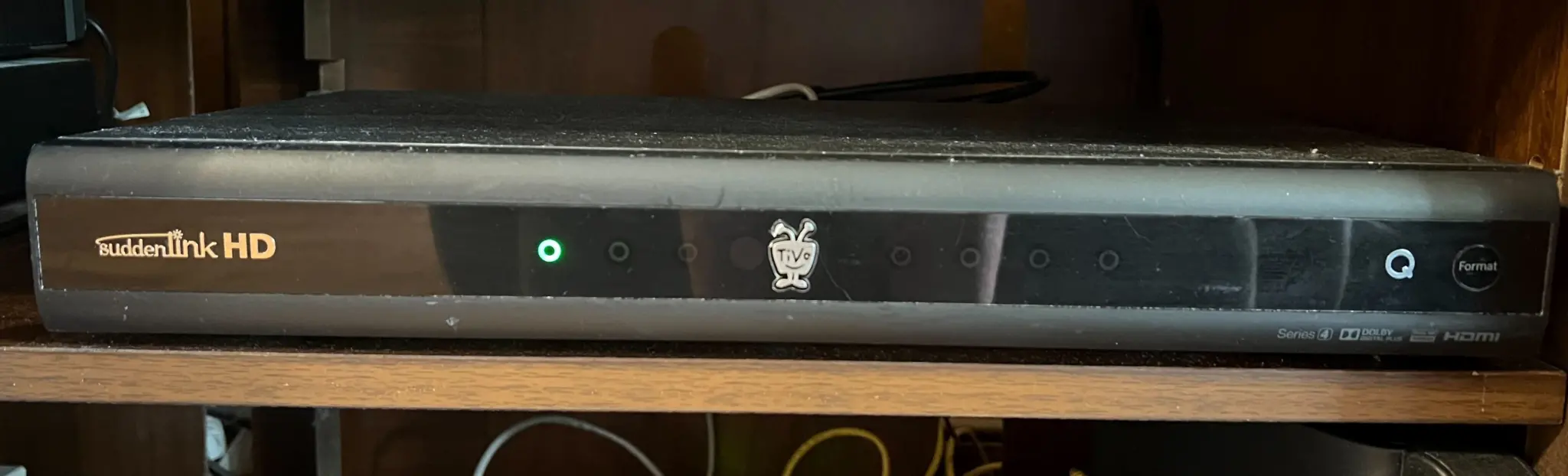
Where to rent
Boxes are rental-only — you cannot purchase them. Rate is per box, per month, billed by Verizon as part of your service.
Setup tips from a pro installer 8 tips · click to expand
- Understand the all-in-one risk Altice One is your cable box, modem, AND Wi-Fi router in one unit. When it dies — and over a 5–7 year lifespan, it will — you lose all three at once. Plan a backup: a $30 travel router can carry the household for the 24–48 hours between a box failure and a tech visit.
- Hardwire what you can The Altice One has Ethernet ports. Plug your main TV, game console, or Apple TV directly into one. Wi-Fi from the all-in-one is decent but a wired connection is always faster and more reliable for streaming.
- Set up the cloud DVR on day one Altice cloud DVR ranges from 60 to 150 hours of storage. Configure recording priorities the day of install — the box doesn't backfill.
- Pair the voice remote correctly Voice remote pairing is similar to Cox's — needs deliberate setup. Follow the on-screen pairing prompts during install rather than fixing it later when you discover voice doesn't work.
- Activate the built-in streaming apps Netflix, YouTube, Prime Video, and a handful of others are built in. Sign in once and they live on the same remote as live cable.
- Add Altice One Mini boxes for secondary TVs Mini boxes are smaller, cheaper ($10/month each), connect wirelessly to the main Altice One, and share the DVR. Avoid running a second full Altice One — the Minis exist for this.
- Disable the Wi-Fi radio if you have a better mesh Settings → Wi-Fi → Disable. If you've got an eero, Orbi, or any modern mesh, turn off the Altice radio to avoid signal conflict. Use Altice's modem function only and run your own Wi-Fi.
- Know how to call retention Optimum's pricing is moderately negotiable, especially in markets where Verizon Fios competes. Mention competing fiber offers and ask for retention rates. Veteran clients save $20–$40/month annually.