Xfinity vs Google Fiber in Salt Lake City — which one should you order in 2026?
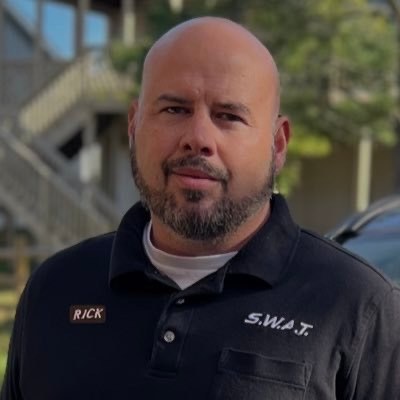
A 28-year residential AV installer's honest take on which ISP is the better order in Salt Lake City metro — by neighborhood, by household, and by what you're actually paying for.
The honest answer in one sentence
Google Fiber wins where available. Xfinity is the cable alternative. UTOPIA Fiber is a Utah-specific third option worth checking.
First — check which one you can actually get at your address
Google Fiber covers parts of Salt Lake City + Provo. UTOPIA Fiber (municipal) serves some Utah cities. Xfinity is the cable incumbent.
How to check before you order: Both providers have address-level checkers on their official sites. Don't trust marketing maps — check at the address level. ZIP-code coverage often differs block to block.
Head to head (2026 pricing snapshot)
| Xfinity | Google Fiber | |
|---|---|---|
| Connection type | Cable | Fiber |
| Symmetric upload speeds | ✗ Capped (~35 Mbps typical) | ✓ Yes |
| Data caps | 1.2 TB typical (varies by provider) | ✓ None |
| Contract required | None on standalone tiers | None on standalone tiers |
| Equipment | ~$15/mo rental or BYO router (most cases) | ~$15/mo rental or BYO router (most cases) |
| Reliability through bad weather | Moderate — coax can degrade in heat/storms | Strong — fiber is weather-resilient |
| Local market dominance | See coverage notes above | See coverage notes above |
Pricing notes: Both providers run regular promotional pricing in this market. Year-1 prices are typically 30-40% lower than year-2 prices. Negotiate at every renewal.
Regional sports + TV coverage
No major RSN since Jazz games went to Sinclair-owned local broadcast deals. National coverage on ESPN/TNT for nationally-televised games.
If you're a local sports fan, RSN availability can be the dealbreaker. Check carefully which RSNs are carried in the TV bundle for each provider, or whether your team has gone direct-to-consumer (cheaper standalone app) since 2024.
Why upload speed matters in Salt Lake City metro
For WFH Salt Lake City professionals, upload speed is often the difference between "internet works for my job" and "internet is fighting me on every Zoom call." Cable's ~35 Mbps upload cap fills up fast when you have:
- One person on a video call with screen-share (~5-7 Mbps)
- Another person on a separate video call (~5-7 Mbps)
- A kid on Google Classroom video (~3-5 Mbps)
- Cloud backup running (Backblaze, Dropbox sync) (~10-20 Mbps)
- 4K Apple Photos library sync (~10-20 Mbps when active)
Fiber providers offer symmetric speeds — your 300 Mbps download is also 300 Mbps upload. Cable typically caps upload at 35 Mbps regardless of download tier. 5G home internet upload varies by tower load.
Local quirks for Salt Lake City metro
UTOPIA Fiber is municipally-owned and competes on price — check availability before committing to Google Fiber.
Cities + neighborhoods this comparison covers
This comparison applies anywhere Xfinity or Google Fiber actually offers service in the Salt Lake City metro. Address-level coverage shifts block to block — these are the neighborhoods and suburbs where at least one of the two has a real buildout in 2026:
If your specific neighborhood isn't listed, check your address against the providers' lookup tools — block-level coverage often differs from broader metro coverage. The list above reflects neighborhoods where Rick or readers have personally confirmed at least one of Xfinity or Google Fiber in 2026.
My recommendation for clients in Salt Lake City metro
The honest answer's at the top of this page — what follows is how that recommendation actually maps to specific households. After 28 years of installs, the right pick almost always comes down to which kind of Salt Lake City metro household you are, not which ISP has the better marketing this quarter.
- WFH-heavy household: Prioritize the fiber option (better uploads + reliability).
- Family with kids streaming + gaming: Either gigabit tier works. Fiber is more future-proof.
- Renter / short-term: Pick the provider with no install fee + no contract. 5G home internet is the easiest in/out.
- Cord-cutter with no TV bundle needed: Skip the TV bundle entirely. Internet-only + YouTube TV is usually cheaper.
- Heavy sports fan: Check RSN coverage before committing — see the RSN section above.
When to consider a third option
In Salt Lake City metro, beyond Xfinity and Google Fiber, look at:
- T-Mobile 5G Home Internet ($50-70/mo) — no install, no contract, 15-day trial. Worth testing as a budget alternative.
- Verizon 5G Home Internet — variable performance by address but can be excellent in cities with strong Verizon 5G coverage.
- Smaller local fiber overbuilders — many metros have a regional fiber operator competing with the major ISPs. Check your address for any options you may not know about.
The gotchas
Promo pricing resets. Year-1 promo prices end. Plan to renegotiate every 12 months, or switch providers if you can.
Equipment rental fees. Most ISPs charge $15/mo for a rented modem/router. Buying your own router (Eero, Orbi, Asus) pays for itself in ~12 months on most providers.
Bundle math is misleading. "TV + internet" bundles usually save $10-20/mo vs internet-only, which doesn't justify the extra hardware + complexity for most households in 2026.
5G home internet variability. Speeds vary block by block. Always use the free trial / return window if available.
"Up to" speeds. Cable + 5G providers quote "up to" speeds — actual speeds depend on local network congestion. Fiber speeds are what they say they are.
Customer service is uneven. All major ISPs rank near the bottom of consumer satisfaction. Smaller fiber overbuilders often have better CS reputations but smaller footprints.
Bottom line
If you skipped to the bottom — fair, here's the action list:
- Default pick: Whichever of the two is fiber (assuming you have both available).
- Fallback: The cable option, then negotiate hard on price.
- Worth checking: 5G home internet or local fiber overbuilders as a third option.
- Skip the TV bundle unless the savings clear $25/mo vs internet-only + YouTube TV.
If you're already overpaying for the wrong tier, switch. Most Salt Lake City metro households can save $20-50/mo by picking the right ISP + dropping the TV bundle in favor of streaming.


