Philips Hue in 2026 — Color Bulbs + Scenes, Not Switches
Hue is the smart-bulb category leader. Color, scenes, "Sync TV" for movies. Excellent at what it does. Wrong for whole-home dimming — that's a Lutron job.
The pitch
Hue is a different category from Lutron. Lutron controls the switch (and therefore the bulb in the fixture). Hue replaces the bulb itself with a smart one. That means Hue can do things Lutron can't — color changing, Hue Sync that matches bulb colors to your TV during a movie, animated "scene" lighting effects. But Hue is also limited by the fact that the bulb has to stay powered — if someone flips the wall switch off, the smart features die until the switch is back on. Hue makes the most sense in rooms where you want color (theater rooms, kids' rooms, statement spaces) — not in whole-home dimming where Lutron belongs.
The 2026 lineup
Hue White and Color Ambiance A19
The standard color smart bulb. 16 million colors + warm/cool white. Required for any Hue scene system.
Check on Amazon →Hue White Ambiance BR30
Recessed-can bulb (color-temperature only, no full color). For ceiling cans in kitchens / living rooms.
Check on Amazon →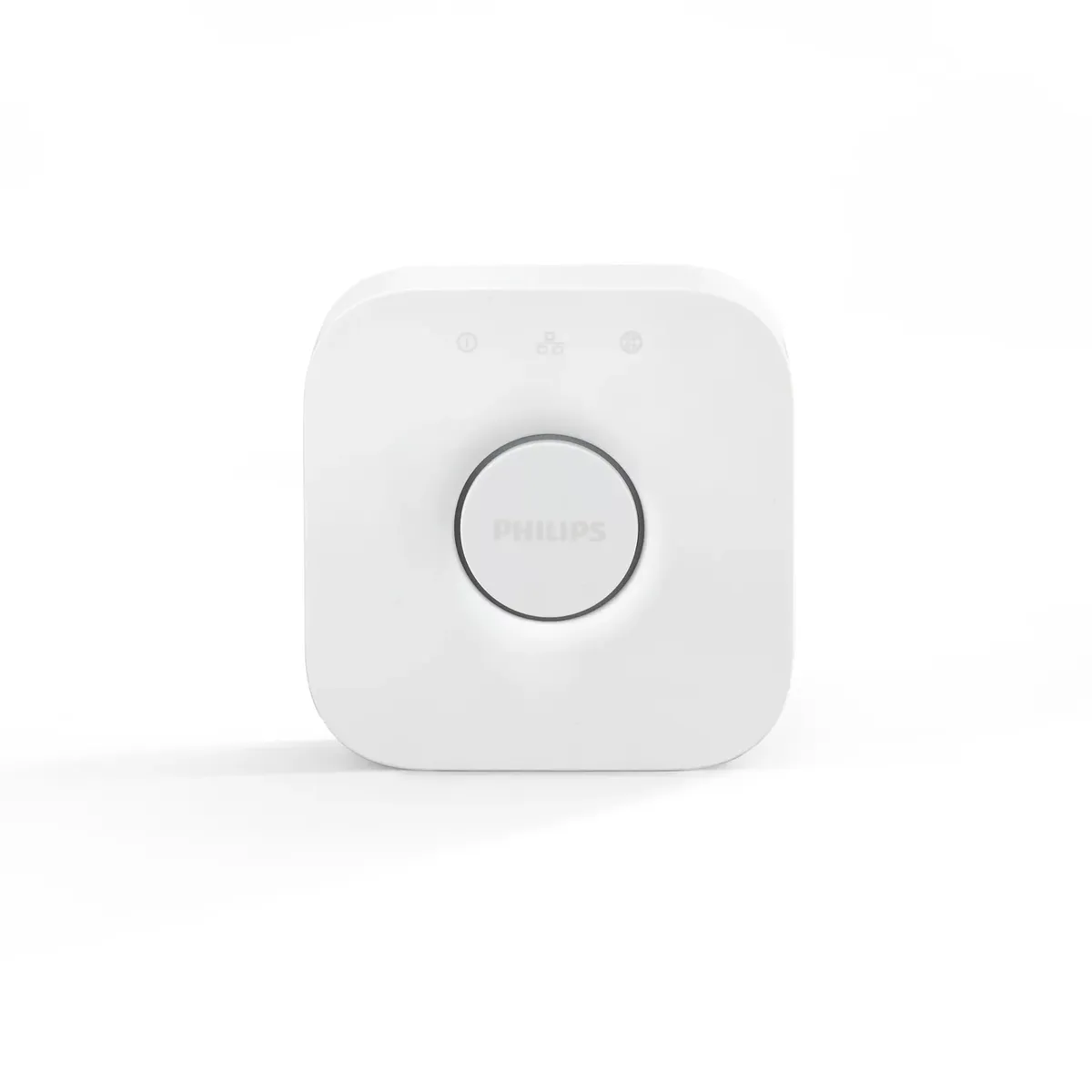
Hue Hub (Bridge)
Central hub. Required for full Hue features (scenes, schedules, away-from-home control). Most starter kits include it.
Check on Amazon →Hue Lightstrip Plus
Behind-TV or under-cabinet color strip. Pairs with Hue Sync for "ambient TV" effect.
Check on Amazon →Hue Sync Box (HDMI 4K)
Connects between your devices and TV. Mirrors on-screen colors to your Hue bulbs in real time. Real "wow" moment for theater rooms.
Check on Amazon →Hue Smart Button / Dimmer Switch
The Hue equivalent of a Pico — physical button that triggers Hue scenes. Less polished than Lutron Pico but it works.
Check on Amazon →Strengths and weaknesses
✓ Where it wins
- Full color — 16 million colors per bulb
- Hue Sync matches on-screen colors to bulbs in real time — best theater-room effect available
- Best scene presets in the smart-bulb category
- Native Alexa, Google, Apple Home
- Animated scenes (sunrise, sunset, "Northern Lights") that change over time
- Largest accessory ecosystem (light strips, outdoor lights, lamps)
✗ Where it loses
- Bulbs have to stay powered — wall switch turned off = Hue is dead until switch is back on
- Per-bulb cost is high — 6 color bulbs in a living room = $300+
- No dimming quality advantage over a quality LED bulb on a Lutron dimmer
- Scene management ties you to the Hue app (or Hue + Apple Home / Alexa)
- Hue Sync only works on devices plugged into a Hue Sync Box (not built-in TV apps)
When Philips Hue is the right pick
Hue is the right pick for theater rooms (Hue Sync is genuinely magical), kids' bedrooms (color changing is fun), and statement spaces (under-cabinet color, behind-TV ambient light). It's also the right pick if you live in a rental and can't modify wall switches.
When to look elsewhere
Hue is the wrong pick for whole-home dimming. The per-bulb cost adds up fast, the "switch turned off kills the system" problem is real, and the dimming quality on color bulbs isn't better than a quality LED on a Lutron dimmer. For dimming, use Lutron. For color and scenes, add Hue in specific rooms.
★ Rick's verdict
Right tool for the wrong job if used as whole-home dimming. Right tool for the right job if used for color and scene effects in specific rooms. The honest pattern is Lutron Caseta or RA2 Select for the house, Hue for the theater room and maybe the kids' rooms. That combination is the most common luxury install I see.